Printing16 seconds
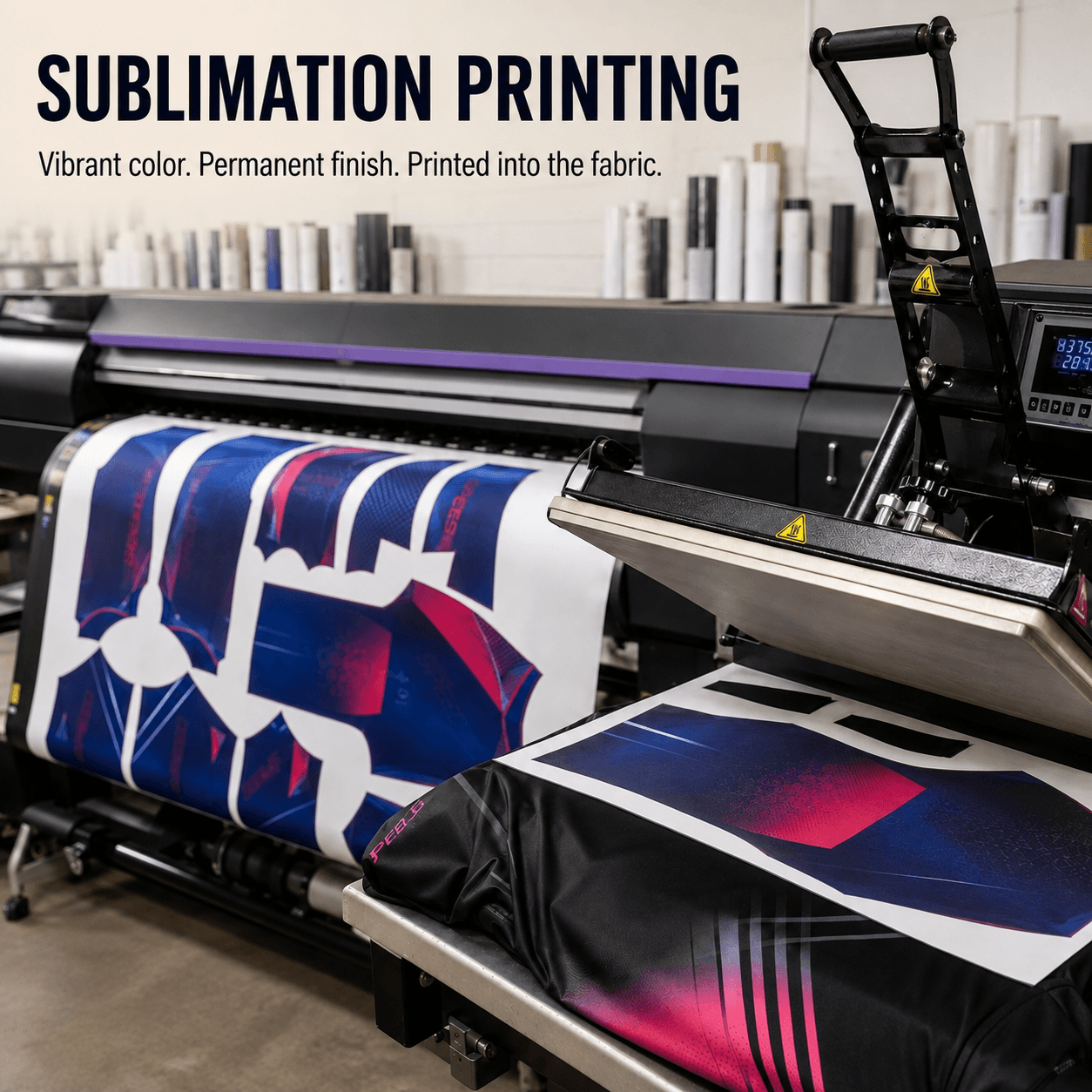
Industrial sublimation printing facility
Large-format printers producing custom sportswear transfer layouts before heat application and garment assembly.
B2B specification guide
Compare material priorities, decoration methods, artwork requirements, sampling, and approval controls before committing a custom sportswear program to bulk production.
Quick Answer
Start with the product's end use, fit, movement, care, artwork, and repeat-order needs. Then confirm a compatible fabric and decoration method together through written specifications and a physical sample. There is no single method that is best for every garment.
Production evidence
These selected reels show printing, embroidery, pattern preparation, stitching, artwork review, and color-reference work that buyers can discuss during sampling.
Large-format printers producing custom sportswear transfer layouts before heat application and garment assembly.
Printed jersey panels are reviewed for colorways, names, numbers, artwork placement, and cutting outlines before the next production stage.
Master patterns arranged on fabric at a cutting table to prepare garment panels for assembly.
Close-up industrial sewing and edge finishing on a sublimated athletic garment.
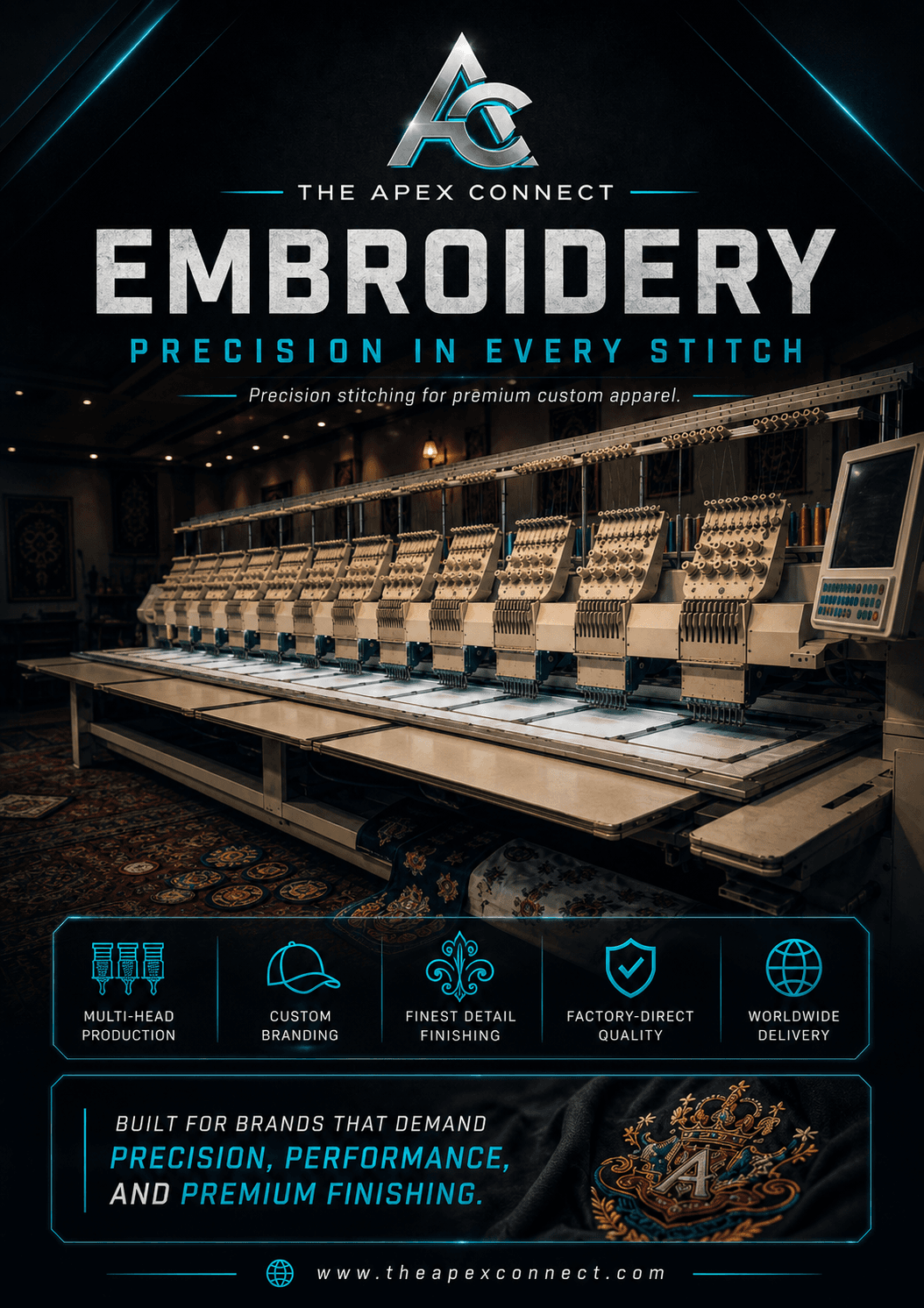
An industrial multi-head embroidery line applying a digitized design to fabric panels.
A color-swatch test roll is printed so buyers and production teams can review references before approved production.
Footage is presented as visual process evidence. Product specifications, availability, minimums, pricing, and production terms remain project-specific and are confirmed in writing.
Define sport, wearer, fit, movement, climate, care, and expected use before discussing decoration.
Fabric, seams, trims, artwork, and branding should be reviewed as one product specification.
Record the approved sample and revisions so bulk production and reorders have a clear reference.
Method comparison
These are decision points, not universal manufacturing promises. Final suitability should be confirmed against the selected material, artwork, construction, and approved sample.
Performance garments designed around printable synthetic panels.
Fabric compatibility, artwork zones, color references, panel alignment, and sample approval.
Logos and identity details where a stitched finish suits the fabric and product structure.
Logo size, stitch coverage, backing, placement, fabric stability, and approved sew-out.
Artwork that can be separated into suitable colors and applied to a compatible garment surface.
Ink system, color count, print area, hand feel, curing, stretch needs, and wash testing.
Names, numbers, badges, and selected graphics when the material and application are compatible.
Transfer type, edge detail, pressure and heat compatibility, placement, stretch, and wash care.
Fabric briefing
A useful fabric brief explains what the garment must do. A supplier can then confirm available constructions and provide a sample instead of relying on an ambiguous material name.
Hand feel and comfort
Construction and seams
Color and artwork needs
Use and care expectations
Product-specific decisions
This guide explains selection. The pages below retain ownership of product-specific manufacturing and quotation intent.
Movement, breathability, names and numbers, sponsor layouts, and repeat-order consistency.
Plan a team uniform programStretch recovery, compression fit, panel construction, seam comfort, and full-artwork alignment.
Review rash guard manufacturingConstruction, reinforcement, collar and seam details, shrinkage expectations, and embroidery placement.
Review judo gi manufacturingEnd use, fit, fabric behavior, trims, decoration compatibility, labels, and packaging requirements.
Explore B2B sportswear manufacturingRFQ checklist
Product type, intended use, buyer type, and destination market
Reference garment, sketch, tech pack, or clearly marked artwork
Preferred fit, size range, measurements, and grading requirements
Fabric priorities such as feel, stretch, weight range, durability, and care
Logo files, colors, placements, names, numbers, and sponsor versions
Labels, trims, packaging, carton marks, and retail-readiness requirements
Sample sizes, review responsibilities, revision notes, and approval standard
Estimated quantity, reorder plan, delivery window, and shipping destination
Buyer FAQ
No. The right method depends on the garment, fabric, artwork, stretch, durability, finish, quantity, and intended use. Buyers should approve the material and decoration together rather than choosing a print method in isolation.
Approve the sample, measurements, fabric, colors, artwork placement, decoration, labels, trims, packaging, and written revision notes. The approved specification should become the reference for production and repeat orders.
Not automatically. Embroidery normally requires a stitch-ready interpretation, while printing methods require suitable artwork, colors, resolution, and production files. Confirm the required file format and approve a physical or production-representative sample.
Keep an approved specification pack that records measurements, materials, color references, artwork versions, decoration details, labels, packaging, and approved sample notes. Confirm any material or process change before reordering.
This guide provides general sourcing considerations. Final materials, decoration compatibility, minimum order quantities, pricing, production timing, testing, and shipping terms are project-specific and must be confirmed in writing.